
Local SEO Blueprint
Local SEO Domination Blueprint
3 proven strategies to rank #1 on Google for your service in your city — without burning another dollar on ads.
Breaking Free from the Paid Ad Cycle
Most local businesses are stuck in an expensive, unsustainable cycle: turn on Google Ads, watch cost-per-lead climb, panic, turn them off, watch the phone go silent, then turn them back on out of desperation.
I'm Alex from Clardy Ventures. After working with dozens of local service businesses, we've identified the small set of factors that separate the businesses dominating local search from the ones nobody can find. This page walks through the entire framework — the same framework we use with paying clients every day.
Businesses implementing Local SEO see a 70% reduction in cost-per-acquisition compared to owners depending solely on paid ads. It's not just cheaper — it's a sustainable asset that keeps generating leads without constant spending.
Heads up before you keep reading
Everything below works. We know because we do it for our clients every day. We also know that 9 out of 10 business owners who read it won't implement it — and that's exactly why their competitors are ranking above them.
The 3 Pillars Google Actually Cares About
When somebody searches for a local service, Google isn't picking randomly. The algorithm weighs three pillars to decide which businesses deserve visibility. Master these and the rest follows.
Relevance
How closely your business matches what the searcher is actually looking for.
Trust
How confident Google is that your business is legitimate, established, and reliable.
Engagement
How real users interact with your business across Google's surface area.
Pillar 1
Relevance: precision-targeted keyword implementation
High-intent local keywords (especially "near me" phrases) convert at 3.5x the rate of generic terms. Here's how to find and own them.
Find your money keywords
Start in Google Keyword Planner. Enter your primary service + city (e.g. "plumber Chicago"), then filter for terms with real commercial intent and decent volume. Ignore the vanity stuff — you want the searches that buy.
The strategic business-name advantage
Your Google Business Profile name carries massive weight. A business called "Chicago Premier Plumbing Services" will typically outrank "Smith & Sons" for plumbing searches in Chicago, even if Smith & Sons has been in business for 40 years.
Fair? Not really. Real? Yes. The businesses winning local search are capitalizing on this.
Location-specific service pages
For every service × location combination, you need dedicated, thoughtful content. Businesses with location-specific pages rank for 68% more local keywords. This is not about spinning the same page with the city name swapped — Google nukes that. Each page needs:
- Location-specific content showing local knowledge
- Service information tailored to that community
- A unique value proposition for that market
URL structure that actually ranks
yourcompany.com/locations
yourcompany.com/locations/plumbing-services-chicago-illinois
yourcompany.com/evanston/water-heater-installation
Clean, descriptive URLs tell Google and users exactly what each page is about. Strong relevance signal, every time.
Ready to outrank your competitors?
We'll map your highest-value keywords on the call.
A free 15-minute Local SEO strategy session with one of our specialists. You leave with a plan, not a pitch.
15 minutes · No pitch · Serious business owners only
Pillar 2
Trust: authority signals Google can't ignore
Reviews — the hard truth
Businesses with 50+ positive reviews rank 37% higher in local searches than those with under 10. Conversion rates jump 270% when a strong review profile is visible.

If you have 7 reviews and your competitor has 500, you're fighting an uphill battle on two fronts: the algorithm and customer psychology. No on-page magic fixes this.
Citation building — the foundation
Your NAP (Name, Address, Phone) needs to be byte-for-byte identical across your site, GBP, Yelp, BBB, Apple Maps, Bing Places, Facebook, and every industry directory that matters. Businesses with clean citations see 23% higher visibility in local search.
Backlinks — quality > quantity, always
One high-quality, relevant local backlink beats hundreds of low-grade directory links. Low-quality links can actively hurt you. Our managed backlink approach has lifted client domain authority by an average of 32% in six months.
The catch: acquiring quality links requires relationships, linkable assets, and strategic outreach — all things most owners simply don't have time for.
Schema markup — the technical trust signal
Schema (LocalBusiness, Service, Review, FAQ) tells Google exactly what your business does and where. Done right, it lifts CTR by 30% via rich results. Most local sites have none.
This is where 70% of businesses get stuck
Reviews, citations, backlinks, schema. Each one is a months-long discipline on its own. Stacked together with everything else you have to run, it's why most owners read a guide like this and never ship a thing.
Build trust the algorithm rewards
Get a free review, citation & backlink audit.
We'll show you exactly where the trust gap is between you and the businesses ranking above you.
15 minutes · No pitch · Serious business owners only
Pillar 3
Engagement: user behavior as a ranking weapon
Click-through rate — the hidden lever
Compelling meta titles & descriptions can lift CTR up to 58%, which itself becomes a ranking signal.
Title formula: [Primary Service] + [Location] + [Brand]
"Expert Plumbing Services in Chicago | Clardy Ventures"
Meta description formula: [Value Prop] + [Service] + [Location] + [USP] + [CTA]
"Fast, affordable plumbing in Chicago. Licensed experts solve any issue in 24 hours or less. Call for same-day service."
Google Business Profile — the front door
Active profiles rank 29% higher than static ones. Fully-optimized profiles see 73% more website clicks and 144% more direction requests.
- Use an exact-match (or near-match) business name where legal
- Keyword-rich, natural business description
- Every section filled — hours, categories, attributes, services
- Services listed individually with detailed descriptions
- Posts, photos, offers updated weekly
On-site engagement signals
Visitors who stay and explore tell Google your content is worth ranking. Our content architecture has lifted average time-on-site by 47% for client sites — and that's not from keyword-stuffed pages. It's from real journeys built around real search intent.
Foundation
Technical SEO: the foundation of ranking success
On-page content and off-page signals get most of the attention, but neither one matters if the technical foundation underneath them is broken. Google has to be able to crawl your site, understand it, and trust it before any of the other work pays off. Get this wrong and every hour you spend on content and links is leaking value.
Website architecture for maximum visibility
Your site structure has to make sense to both humans and crawlers. A logical hierarchy (Home → Services → Specific service → Location) gives Google a clear map of what you do and where authority should flow. Clean navigation means every important page is reachable in 2-3 clicks from the homepage — anything buried deeper effectively doesn't exist to search engines.
Mobile performance isn't optional anymore. Over 60% of local searches happen on a phone, and Google indexes the mobile version of your site first. If your site loads in over 3 seconds on a mid-range phone, you're bleeding rankings and conversions before a visitor sees a single word. Compress images, defer non-critical scripts, and pick a host that can actually serve your pages quickly.
Google Search Console: your SEO command center
Search Console is free, Google-built, and non-negotiable. It's how you tell Google about your sitemap, see exactly which queries are bringing in clicks, catch indexing issues before they tank you, and understand which pages are actually performing. If you don't have GSC connected, you're doing SEO blind — guessing at what's working instead of measuring it.
No Search Console = no real SEO
Setting it up takes 15 minutes. Verify your domain, submit your sitemap, and you instantly get the data Google itself uses to decide what to show. Every serious SEO engagement starts here.
Sitemap creation and submission
A sitemap is a roadmap that lists every page you want Google to know about. It speeds up indexing of new content, makes sure important pages aren't overlooked, and gives Google extra metadata (last updated, priority) to work with. On WordPress, Yoast or Rank Math generate this automatically — your job is to make sure it's accurate and submitted in Search Console. On custom sites, it needs to be built and kept in sync as you publish.
Search intent: knowing what your customer actually wants
Not every search is created equal. A page that ranks for the wrong intent gets traffic but no leads. Map every target keyword to one of these four buckets and build the page to match:
- Informational — "how often should I clean my gutters". Early-stage research. Educate, build authority, capture them for later.
- Navigational — "ClardyVentures contact". They already know your brand. Make sure the right page exists and is easy to find.
- Transactional — "hire plumber today". Ready to buy. The page should be ruthlessly focused on the call-to-action.
- "Near me" — "plumber near me". High intent + high location priority. Your Google Business Profile and local landing pages need to be dialed in to win these.
Match the page to the intent and rankings, click-through rate, and conversion rate all move together. Mismatch it and you'll bring in traffic that bounces — which itself becomes a negative ranking signal.
Tactical playbooks
How we actually execute each piece (the short version)
Strategy without execution is a podcast. Here are the condensed step-by-steps for the pieces business owners ask us about most. Each one is a multi-week effort done right — we're showing you the shape, not the full SOP.
How to set up & optimize your Google Business Profile
- Claim & verify at business.google.com. Use the legal entity name; verify by postcard, phone, or video (Google chooses).
- Primary category is the single biggest GBP lever — pick the one that most exactly matches your money service (e.g. "Plumber" beats "Contractor"). Add 5–9 secondary categories.
- Address — show it. Hiding your address because you're a "service-area business" is a massive ranking disadvantage. Google gives preferential treatment to businesses with a visible address. If your competitors show theirs and you don't, you're starting behind. You can still set service areas; just don't hide the address.
- Services — add every individual service as its own entry with a 200–300 char keyword-rich description.
- Description — 750 chars, naturally include primary service + main city, no marketing fluff.
- Photos — 30+ to start, then 3–5/week. Geo-tag where possible. Real job-site shots beat stock.
- Q&A — seed 5–10 questions yourself, answer them yourself. Owns the narrative competitors can't.
- Posts — 1–2/week (Updates, Offers, Events). Inactive profiles drop fast.
How to build local citations
- Lock your NAP in a doc — exact name, address format, phone, website URL, hours. Every listing uses this verbatim.
- Tier 1 (must-haves): Apple Business Connect, Bing Places, Yelp, Facebook, BBB, Yellow Pages, Foursquare, Nextdoor.
- Tier 2 (industry-specific): Angi, HomeAdvisor, Houzz, Thumbtack, Porch (for trades). Each vertical has its own.
- Tier 3 (local): Chamber of Commerce, local BBB chapter, neighborhood association sites, city .gov business directories. These are the high-trust ones competitors skip.
- Audit for duplicates & inconsistencies with BrightLocal or Whitespark — old phone numbers and "Suite 100 vs Ste 100" mismatches actively hurt you.
- Re-audit quarterly. Phone changes, address moves, and acquired listings drift. Drift = trust loss.
How to do backlink outreach (without sounding like a spammer)
- Build a linkable asset first. A useful local guide, a free calculator, original data, or a "best of [city]" roundup. Nobody links to a services page.
- Prospect 100 sites per campaign: local news, industry blogs, suppliers, complementary businesses, alumni networks, sponsorship pages, "resource" pages, broken-link targets.
- Find the right human. Editor, content lead, or owner — not info@. Hunter.io / Apollo to get the email.
- Personalize the first line. Reference something specific from their site. Generic outreach gets 0% reply rates.
- Lead with value, not the ask. Offer the asset, offer a quote, offer to fix a broken link you found on their page.
- One follow-up after 5 days. Then move on. Track everything in a sheet (status, last touch, anchor used).
- Diversify anchors. Mostly branded + naked URL, some partial-match, very few exact-match. Over-optimized anchors are a flag.
How to generate a steady stream of reviews
- Ask at peak happiness — right after a successful job, before the invoice arrives.
- Two-tap link. Use your GBP short link via SMS. Any extra step kills conversion.
- Templates, not scripts. Ask the customer to mention the specific service ("water heater install") and the city — these become ranking-relevant review snippets.
- Respond to every review within 24 hours. Use the service + city keywords naturally in your replies.
- Velocity matters. 2–5 new reviews/month forever beats 50 in one burst (which can trigger a filter).
How to install schema markup (the basics)
- LocalBusiness on the homepage and contact page — NAP, hours, geo coordinates, areaServed, sameAs links to your social/citation profiles.
- Service schema on every service page, with provider, areaServed, and offers.
- FAQPage on pages with genuine Q&A blocks — unlocks rich results.
- BreadcrumbList sitewide on subpages.
- Review / AggregateRating only on pages that actually display the reviews — Google enforces this.
- Validate every type with Google's Rich Results Test before shipping. Invalid schema = no benefit at best, penalty at worst.
How to find your highest-value keywords
- List every service you actually want more of — be honest about margins.
- Pair each service with every city you serve. That grid becomes your keyword universe.
- Run it through Keyword Planner + Semrush. Filter for commercial intent (words like "near me", "service", "hire", "cost", "installation").
- Score each by: monthly volume × intent × difficulty. Top 20 become your first wave of money pages.
- The rest become supporting blog content that internally links into the money pages.
Most owners stop here
The concepts are simple. The execution is brutal.
Below is exactly why 90% of business owners read this, nod along, and never rank. And what to do about it.
15 minutes · No pitch · Serious business owners only
The reality
Why most owners read this and still don't rank
At this point you're probably thinking: "Got it. Makes sense." Understanding and implementation are very different things. Here's why most business owners never close the gap:
Time
Proper execution is 10–15 focused hours per week. Forever. You don't have it.
Technical depth
Schema, Search Console, sitemaps, hreflang, page speed — the concepts are simple, the implementation is not.
Consistency
SEO is not a project. It's a process. Miss a month and competitors close the gap.
Competitive analysis
What works in your city may flop in the next one. You need someone who's already done it in your market.
The trap
The Google Ads hamster wheel — and how to step off
- 1Turn on Google Ads to generate leads
- 2Cost-per-lead steadily climbs as competition grows
- 3Margins shrink, profit per job drops
- 4You turn ads off when it stops making sense
- 5Lead flow dies overnight
- 6Out of desperation, you turn ads back on — and repeat
Local SEO breaks the loop. You build an asset that compounds:
- Sustainable lead engine that doesn't require constant payment
- Cost-per-acquisition down up to 70%
- A competitive moat that strengthens every month
- Leads coming in 24/7, even when you sleep
Stop renting leads
Let's build you a lead engine you actually own.
On the call we'll look at your current visibility, your top 3 competitors, and the fastest path to ranking #1 for your money keywords.
15 minutes · No pitch · Serious business owners only
Our process
The Clardy Ventures Local SEO system
After running this framework on dozens of service businesses, we've refined a process that consistently delivers. This is what we ship for paying clients:
Local keyword research
We pin down the exact terms your ideal customers are searching for in your service area — with intent scoring.
Strategic content architecture
Authority built around your core services, with city/service pages systematically targeting high-converting searches.
Authority building system
Structured review acquisition, NAP cleanup, citation expansion, and white-glove backlink outreach.
Technical SEO build-out
Schema, URL restructuring, Core Web Vitals, Search Console integration. The plumbing nobody else fixes.
Competitor benchmarking
We reverse-engineer your top 5 competitors and build a plan to leapfrog each one.
Continuous optimization
Monthly reviews, monthly improvements. SEO is a compounding asset only when someone tends it.
Real results
What this looks like in production
Our clients typically see ranking improvements within 30 days and an average 457% increase in organic leads inside the first six months.
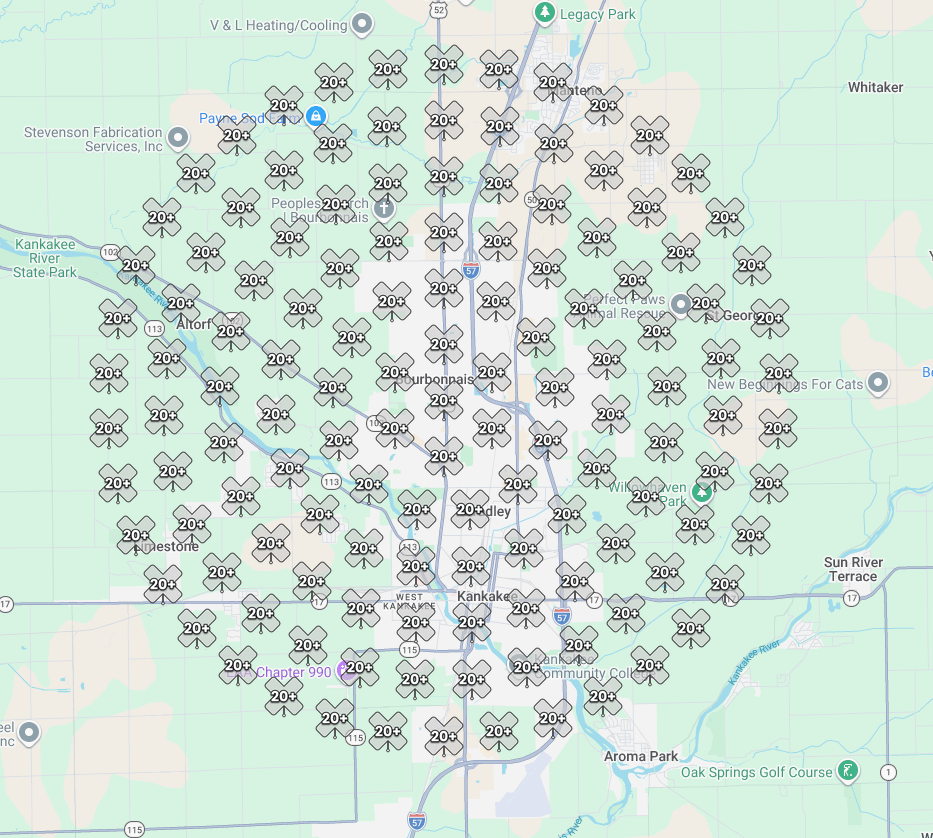
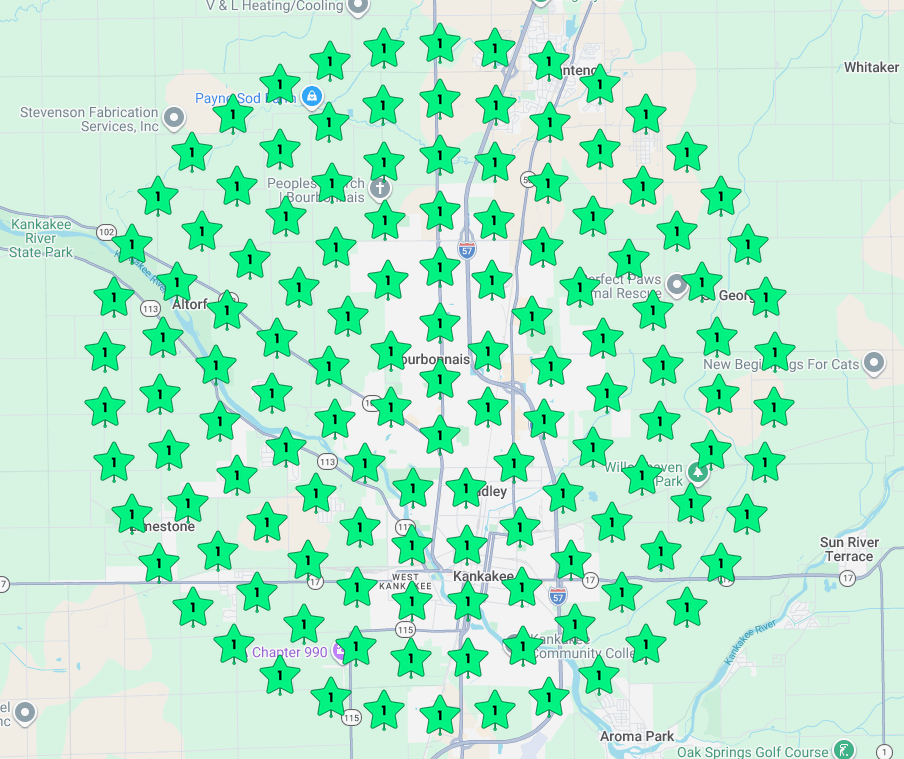
Less than 90 days
From buried to dominating the map pack.
Same business. Same service area. Less than 90 days of executing the framework above.
Final step
Ready to escape the paid-ads hamster wheel?
Book a free 15-minute Local SEO strategy session. We'll:
- Analyze your current search visibility
- Identify your highest-potential keyword opportunities
- Uncover competitive gaps you can exploit
- Map out a customized Local SEO roadmap
For serious business owners only · No pitch · No spam